Living autism

When the time comes to finally live the autistic life, it can feel both daunting yet potentially liberating but how to go about it. We are forced to question which reality is the real one, the one where we normalise successfully and do all the stuff that looks like having a relatable life (through the eyes of other people) but with terrible outcomes for health, or the one where we are fully cognisant of our autistic traits, meaning that we accommodate them so much better but also meaning that our life inevitably looks much more withdrawn, carefully curated and (yes) autistic by default? In this post I explore questions such as whether and why to seek a formal diagnosis and how to reset social expectations and other boundary issues as I venture boldly into the territory.

Music festivals and the like: The biggest win isn’t pushing through but getting real about what you can and can’t do

As someone who is both autistic and who has disabilities, I've learned the hard way that the most important thing is to keep getting ever closer to living within my actual capacity (not some pipe dream based off "what I have done in the past" during all those years when I tended to try and normalise my behaviours), knowing my limitations, tailoring my life more and more to what feels good without all the compromise and stepping away from circumstances that have too high a toll, in terms of physical consequences and overstimulation from crowds and such, to be any good for me.

hEDS and “energy flu”

I’ve been calling it “energy flu” for decades but what I mean by this is when the environment changes and I sense it through every tissue and fibre of my hypermobile body and it affects me…affects literally all of me, like I’ve walked in or out of a pressure chamber and nothing is quite normal whilst I adjust. Talking about hEDS in relation to an increased sensitivity to environmental shifts, how this impacts sensations, symptom load such as pain and dysautonomias, functional ability, executive function and more and things you could possibly consider as a better way of managing these episodes.

How long awaited hEDS diagnosis actually FEELS

So as it turns out, I'm not lazy, not hypochondriac, not a malingerer, not attention seeking, not making it all up, not interfering where I shouldn't, not feeble (far from it), not "over-sensitive" (ditto), not making a hobby or a hyperfocus out of illness, not collecting labels, not depressed nor anxious (except when the circumstances themselves pushed me that way), not trying too little nor doing it all wrong, not lost in self-absorption, not avoiding being a grown-up...or alive. I have been dealing with a complex multi-systemic health condition with as much grace and determination as I could muster on a daily basis. Unpacking some of the emotions of receiving a long awaited diagnosis.

Finally, a diagnosis!

Why is diagnosis just so darned important and cathartic when you are living with complex health; is it just because of finding the right treatment protocols (which is an important consideration since the advice for one chronic condition can be quite contrary to the advice for another, as I learned the hard way) or is there so much more to it than that?

When chronic fatigue meets an ADHD brain

Just like it’s much harder for a hypermobile person to recover from an extended period of inactivity and lack of appropriate load-bearing (since I learned this the hard way, I have now heard it coorroberated by many reliable sources of hypermobility-meets-chronic fatigue information) I suspect it’s much harder for a neurodivergent person to recover from extended lack of cognitive load bearing. In fact, across both areas, my whole view of pacing has had to be changed since I was busy writing about it last year, with my source information taken from more neurotypical outlets at that time. So what’s important here is to "use it" in order not to "lose it"…yes…but to adapt the way we “use” and “move” to what we can genuinely cope with at this time, be it recumbent exercise or micro dosed cognitive excursions that we enjoy but don't sustain for too long at a time.

Reframing PEM and considering how it may be linked to delayed emotional and sensory processing in autism

How could having more sensory information to process than the next person and delayed emotional processing have to do with post exertional malaise or delayed onset pain and what could any connection between them tell us about PEM so that we can reframe it in a more positive light?

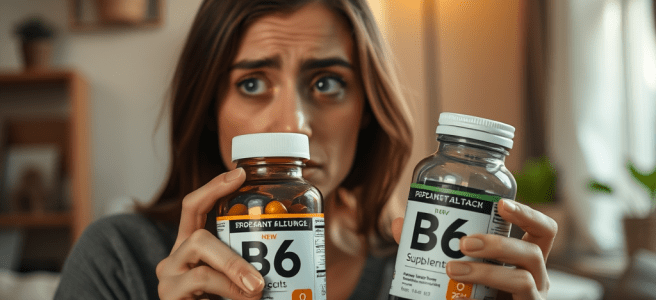
B6 toxicity? When there’s a reasonable posibility.

Potentially toxic levels of B6 supplements adversely affecting many people's health are finally hitting the spotlight and, by coincidence, just when I am finding out that they may have been a contributing factor to some of my worst and most frightening symptoms. Sharing the journey of discovery so far.

Super syndrome: taking a unified approach to all the things

What if there is a constellation of frequently overlapping health “things” that some of us have going on, all of them connected together so deeply and intrinsically that it makes a nonsense to consider them in a piecemeal fashion? Looking into the findings of a couple of neurodivergent medical professionals who share this view I have so long held and ways we can use the information to further our self-understanding and thus empower ourselves.