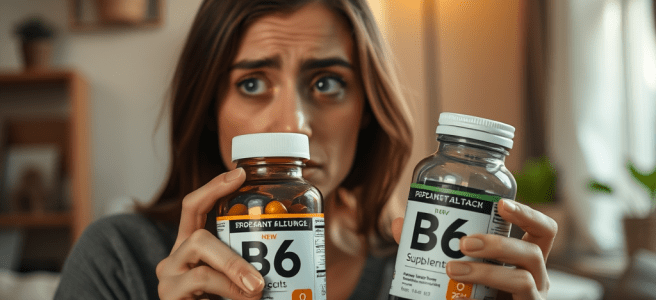
B6 toxicity? When there’s a reasonable posibility.

Potentially toxic levels of B6 supplements adversely affecting many people's health are finally hitting the spotlight and, by coincidence, just when I am finding out that they may have been a contributing factor to some of my worst and most frightening symptoms. Sharing the journey of discovery so far.

Super syndrome: taking a unified approach to all the things

What if there is a constellation of frequently overlapping health “things” that some of us have going on, all of them connected together so deeply and intrinsically that it makes a nonsense to consider them in a piecemeal fashion? Looking into the findings of a couple of neurodivergent medical professionals who share this view I have so long held and ways we can use the information to further our self-understanding and thus empower ourselves.

Slowly inching back outside after a crash

Of course you want to get back out there doing normal things, just as soon as you feel remotely ready, but there's a right time and a right way to do this with ME/CFS. Exploring some of the expectations, the risks, the difficulties and the lessons of inching back outside again.

Life in the gap: coercing an AuDHD brain to work within the energy parameters of ME/CFS

Learning how to slow down, how to pace or stop everything including your overactive mind may be the biggest achievement of your life with ME/CFS when you are also AuDHD because it is THE hardest thing for you...yet slow down or stop you must. The point is, those spaces and pauses between exertion and overthinking, that very void you always dreaded, may hold the very healing elixir, the antedote, you've probably chased after all these years but getting into this state is always doubly tough for you and takes such persistence and focus...perhaps more effort than all the things you ever filled-up all your days with before.

Making invisibility more visible as someone with hidden disabilities

A recent experience I had, as someone living with invisible disabilities, including its positive outcome, just goes to show the importance of speaking up for your needs, of feeding back when things don’t work out and of urging venues and organisers to try harder in the future. Some, if not all, will listen and, in time, things should get better. It will also take a lot more education of the general public for things to really improve, which is something I hope we are all prepared to work towards, as we each do whenever we stand up for our challenges or dare to speak out and educate people regarding what isn’t so immediately obvious about our disability experience, utterly life-encroaching though it may be to us. We have every right to be able to expect to take part in, and enjoy, experiences that able bodied people are able to take for granted and, if it takes a few tweaks and accommodations to make that happen, then we should be pushing for those until we get them. Yes its very hard to do, and we need to pick the right time (for us) to be more vocal as it can take a lot out of us when we are already struggling but we also have to think about contributing, when we can, towards making our invisibility more visible, in all aspects of life until, little by little, people start to see us more clearly.

(Finally) dedicated to pacing

I am now forced to humbly admit that most of my prior attempts at pacing, over all the many years of constantly dabbling with it, weren’t really pacing at all because I simply wouldn’t stick at it and would then fall back into old habits as quickly as blink. I always had my excuses at the ready as to why this one thing I “had” to push through was outside the jurisdiction of my need to pace or couldn’t be avoided (a dread of disappointing or letting others down being one of the most consistent excuses) when, really, the whole of life has to become one giant, continuous exercise in pacing to make this whole thing work sufficiently enough to avoid the constant boom-bust cycle of flare-ups and chronic fatigue that potentially get harder to recover from each time.

Stabilising the autonomic nervous system as a first crucial step

There is no separating the nervous system from the various different aspects of how the body has started to misfire over the years, cumulating in whatever burnout or crash led you to where you now are, however much other provoking factors (such as a virus or accident) might have taken the brunt of the blame because, after all, what makes one person respond to those things differently, more devastating and lastingly, than the next person if its not the nervous system? Post Exertional Malaise is a classic manifestation of this whilst tracking its triggers can teach us such a lot about our personal state of misfiring health.

Ehlers Danlos and reproductive health issues…the unsung song

The very strong association between EDS or HSD and reproductive health issues is seldom talked about, even more rarely studied. Exploring the territory of how apparently more than half of women with EDS or HSD have vulvodynia, am alarming 77% report dyspareunia, so many have enhanced menopause issues that this is often the first thing that really flags up that they are hypermobile in the first place and that's not even touching on all the other issues they may have put up with along the way, such as dysmenorrhea (particularly painful periods), cysts, pregnancy issues and postpartum injury. Shedding a little bit of light on these topics and exploring anything, at all, that helps.

Hyper: when your body doesn’t behave in predictable ways

Curly tubes, slow motility, mystery pain, treatment outcomes that don't "take" for very long, delayed and paradoxical responses and an ongoing tricky relationship with gravity...exploring some of the quirks of living with a hypermobile body.

Central heating as a potential trigger of vagus nerve atrophy?

Central heating can be a blessing but also such a curse. I strongly suspect that there's a need for the living environment to become more closely related to what nature has in mind, per the season we happen to be in. I don't mean that we need to make it frigid and uncomfortable but at least not stuffy, coddled or so artificially consistent...because all manmade consistency does for us is reduce the natural capacity to deal with variety and change (a case of use it or lose it). Personal zone temperature consistency sends confusing messages to a body that needs to still be able to cope with a highly variable world out there all of the rest of the time. If adaptability to change isn't your strong suit (particularly if you are neurodivergent) this can create real problems with the autonomic system and thus your health.