The fact I “seem” to be coping with the big event doesn’t mean that I really am!

My hypermobile neurodivergent way of getting through an event might not be typical and will generally involve a lot of extra strategy and accommodations but it is just as valid as the next person's and, the more I own this, the less disappointed I am with myself or my circumstances. The world does not, in any large way, accommodate people with neurodivergent sensory responses to the environment or their not insubstantial neurological or physical differences, especially if hypermobile, therefore big events are seldom pitched to accommodate us, as a minority factor in the room. The very best I can do is have my own list of helpful methods and tools at hand to get me through these big events my way whenever they happen, with a view to minimising the worst kinds of after effects sufficiently enough for me to be able to hold on to the happy highlights instead of all the low points. Here are a few of my tips to myself in case they are of use to anyone else.

Music festivals and the like: The biggest win isn’t pushing through but getting real about what you can and can’t do

As someone who is both autistic and who has disabilities, I've learned the hard way that the most important thing is to keep getting ever closer to living within my actual capacity (not some pipe dream based off "what I have done in the past" during all those years when I tended to try and normalise my behaviours), knowing my limitations, tailoring my life more and more to what feels good without all the compromise and stepping away from circumstances that have too high a toll, in terms of physical consequences and overstimulation from crowds and such, to be any good for me.

hEDS and “energy flu”

I’ve been calling it “energy flu” for decades but what I mean by this is when the environment changes and I sense it through every tissue and fibre of my hypermobile body and it affects me…affects literally all of me, like I’ve walked in or out of a pressure chamber and nothing is quite normal whilst I adjust. Talking about hEDS in relation to an increased sensitivity to environmental shifts, how this impacts sensations, symptom load such as pain and dysautonomias, functional ability, executive function and more and things you could possibly consider as a better way of managing these episodes.

How long awaited hEDS diagnosis actually FEELS

So as it turns out, I'm not lazy, not hypochondriac, not a malingerer, not attention seeking, not making it all up, not interfering where I shouldn't, not feeble (far from it), not "over-sensitive" (ditto), not making a hobby or a hyperfocus out of illness, not collecting labels, not depressed nor anxious (except when the circumstances themselves pushed me that way), not trying too little nor doing it all wrong, not lost in self-absorption, not avoiding being a grown-up...or alive. I have been dealing with a complex multi-systemic health condition with as much grace and determination as I could muster on a daily basis. Unpacking some of the emotions of receiving a long awaited diagnosis.

Reframing PEM and considering how it may be linked to delayed emotional and sensory processing in autism

How could having more sensory information to process than the next person and delayed emotional processing have to do with post exertional malaise or delayed onset pain and what could any connection between them tell us about PEM so that we can reframe it in a more positive light?

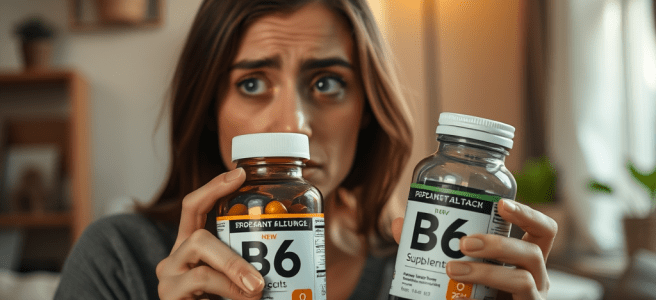
B6 toxicity? When there’s a reasonable posibility.

Potentially toxic levels of B6 supplements adversely affecting many people's health are finally hitting the spotlight and, by coincidence, just when I am finding out that they may have been a contributing factor to some of my worst and most frightening symptoms. Sharing the journey of discovery so far.

Super syndrome: taking a unified approach to all the things

What if there is a constellation of frequently overlapping health “things” that some of us have going on, all of them connected together so deeply and intrinsically that it makes a nonsense to consider them in a piecemeal fashion? Looking into the findings of a couple of neurodivergent medical professionals who share this view I have so long held and ways we can use the information to further our self-understanding and thus empower ourselves.

When the dopamine wears off…avoiding the next crash

Does dopamine really mitigate pain? If so, what part does dopamine shortfall play in chronic pain conditions such as fibromylagia, neuralgia and in the delayed and often exaggerated post exertional responses of ME/CFS? How does this factor overlap with other dopamine deficient conditions such as ADHD and parkinsons and how can the knowledge of it be used to hack a better life in chronic health cases where dopamine levels play such an intrinsic part?

ME/CFS and neurodivergence: a potential overlap?

There are so many overlaps between ME/CFS with common neurodivergent factors such as extreme sensory sensitivity and environmental challenges, increased hypermobility, porosity and laxity, orthostatic challenges such as POTs, increased susceptibility to viruses and adverse medical side-effects, sometimes lifelong energy deficits and frequent burnout events that, surely, the question needs to be asked...is there a credible link between neurodivergence and having an increased propensity to develop the condition? If so, how do you single them out; is it even viable to try and view the one factor in isolation from the other if they now coexist side-by-side, as they clearly do for me, or is the better headway always made once they are viewed as a kind of package of tricky responses to "life" as we know it.

Slowly inching back outside after a crash

Of course you want to get back out there doing normal things, just as soon as you feel remotely ready, but there's a right time and a right way to do this with ME/CFS. Exploring some of the expectations, the risks, the difficulties and the lessons of inching back outside again.