Sometimes we all need a little faith in ourselves, and the gentle push of momentum, to realise we can be our own rescue party. Exploring the extraordinary power of momentum in the journey of self-healing and becoming more whole.
Momentum

Sometimes we all need a little faith in ourselves, and the gentle push of momentum, to realise we can be our own rescue party. Exploring the extraordinary power of momentum in the journey of self-healing and becoming more whole.

We all need some sort of containment, a reliable edge to our experiences, to enable us feel held and supported in life...and belief systems can do this for the majority of people (to a point). My neurodiverse way seems to have required that I build by own edges from scratch, plucked from a cacophony of sensory experiences and turned into the life supporting routines, rituals and focal points of my life; some distinctly more supportive than others (but getting there). Exploring the need for edges and how to make them better - Asperger's style.
How do we know the difference between when our intuition is speaking to us or when our self-sabotaging fears are stopping us in our tracks? This is an essential lifeskill for self-care and guidance when we venture back into life's busy fray...
...for those of us who are especially sensitive, though the idea of being "out" amongst a load of other people in a room together is quite abhorrent as an idea, the reality is we could benefit from this more than most...because its the missing link to our health, we have to dare to go there to break the stalemate of our stuckness, and choir is an appropriate way in as it puts us where harmony is the very name of the game.

Some of us, perhaps especially women, have orchestrated our lives to be loners (sometimes, even in a crowd); a desire that has perhaps been coloured by our early life experiences of being in a group. For a time, this can feel necessary and healing but we should never take for granted that this is the way it has to be forever. The key is to question, do I actually want to be alone all, or most, of the time or have I settled for this due to it feeling like there is no alternative? Are there parts of myself I’m not exploring because of the fact I avoid being in a group context (because of what happened before…) and am I ready now to push my own boundaries and go there, undeterred by stories of the past?

The Earth is something so few of us think of as something we are deeply attached to and yet our planet is the parent from which we are never truly severed, though we do a great deal to wear thin the connection. Like stroppy teenagers, the modern human abuses and tugs at the tie, hardly considering how it will come to value and rely on it in years to come (perhaps, as often happens with our human parents, somewhat too late). The more detached we get, the less we thrive and the deeper the wound inside ourselves grows as we sense our own discordance with the universal pattern of Nature of which we are meant to be part. So what does that look like...and how do we reverse it?

Hard science has uncovered a mechanism whereby the same collagen abnormalities in EDS that make joints especially flexible seem to affect blood vessels, making those with it prone to accumulation of blood in the veins of the legs, an effect that may lead to exaggerated cardiovascular responses to maintain the output of blood from the heart. This and other foibles, which I feel are versions of the same response, put those of us with this issue under immense pressure and strain, all the time, as our version of "normal" so just imagine how much we then react to any additional triggers, to which we tend to be hypersensitive (I share my about theory about that too...), setting off our nervous system at regular intervals in a way that has nothing inherently to do with mental health...although, no surprise, it can start to manifest as anxiety over time. Joining some dots and celebrating just how much people with hypermobility type EDS deal with as their daily benchmark...plus some practical ways of making it better.
How do Aspie women compensate for their weak spots; do they, perhaps, make the very specialism of them? Shining a light on this newly realised paradox in my own life in case it illuminates a trend in how Asperger women cope with a world that demands so much that is quite alien of them.
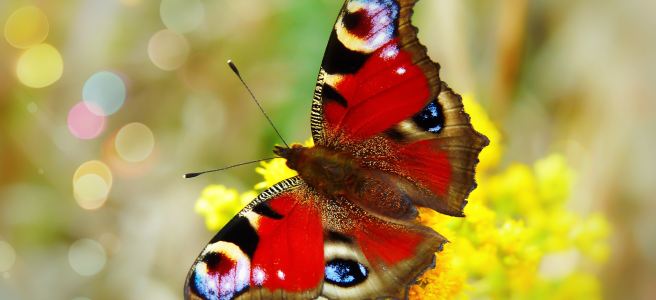
Adult women who discover they are Aspie’s are like butterflies; for they have been tightly bound in an ever-increasingly alien and limited format for what felt like too long and then, ultimately, the extreme straightjacket effect of some sort of chrysalis experience prior to emerging through their diagnostic epiphany...

What is maturity anyway; what constitutes adult behaviour...and who says so. This isn't a rebellion manifesto; its autism, the way it is already wired so how does that look as a parent or a child (and both put together)? Here's celebrating its many plus points from a personal perspective.


 Living whole