
Groundbreaking new study: The Norris Lab has released one of the largest international surveys ever conducted on hypermobile Ehlers-Danlos Syndrome (hEDS) and Hypermobile Spectrum Disorders (HSD). By challenging some of the pre-existing ideas this will hopefully lead to improved clinician understanding and better outcome for patients. Highlights include:
- An average 22-year diagnostic delay for hEDS (in my case, this took over 40 years from symptom onset)
- High rates of misdiagnosis, even under current criteria (various labels, eg. fibromyalgia, ME/CFS, anxiety etc. have been applied in my case, as is extremely common, but suspected hEDS took years to be validated, in spite of my own suspicions, and may never have been if I had not sought a private consultation)
- Multisystemic burdens spanning immune, neurological, gastrointestinal and autonomic systems (these diverse topics provided material to this blog for years, long before I suspected their origins, but should have been clinical red flags when overlapping)
- A high prevalance of Postural Orthostatic Tachycardia Syndrome (POTS), Mast Cell Activation Syndrome (mCAS) and allergic-type conditions (I have finally had MCAS and dysautonomias including POTS clinically validated; again, only made possible via privately funded consultations when, really, diagnosis should be fairly available to all)
- Significant out-of pocket costs and healthcare strain (my health-related costs, including diagnostic opinions sought, currently stand at approx £7k/year)
- Living with these conditions takes on average 5 hours per week coordinating care in a very high proportion of individuals with either condition (my current diary consists of medical appointments on an average of 2-3 days out of every 5 and many more hours spent devising condition-related strategies and accommodations)
- An average of 6.5 specialists seen per year hEDS and 5.2 HSD (so far this year I have seen 6 different specialists (4 consultants), on 8 different occasions in total, and more yet to come)
- Evidence that hEDS and HSD may be complex syndromes, not just connective tissue disorders (as I have so long maintained).
It is extremely gratifying to see the lived experience of hEDS and HSD, finally, taken into account and used to shed light on the multi-systemic burden of these conditions. Here’s hoping that these findings are used to reevaluate the usefulness of the current diagnostic standard (which is riddled with limitations) and to reappraise the need for prompt, accessible medical attention afforded to all individuals presenting with associated symptoms; also, a much improved track-record of noticing and then, crucially, believing in and acting on them at a far earlier stage!
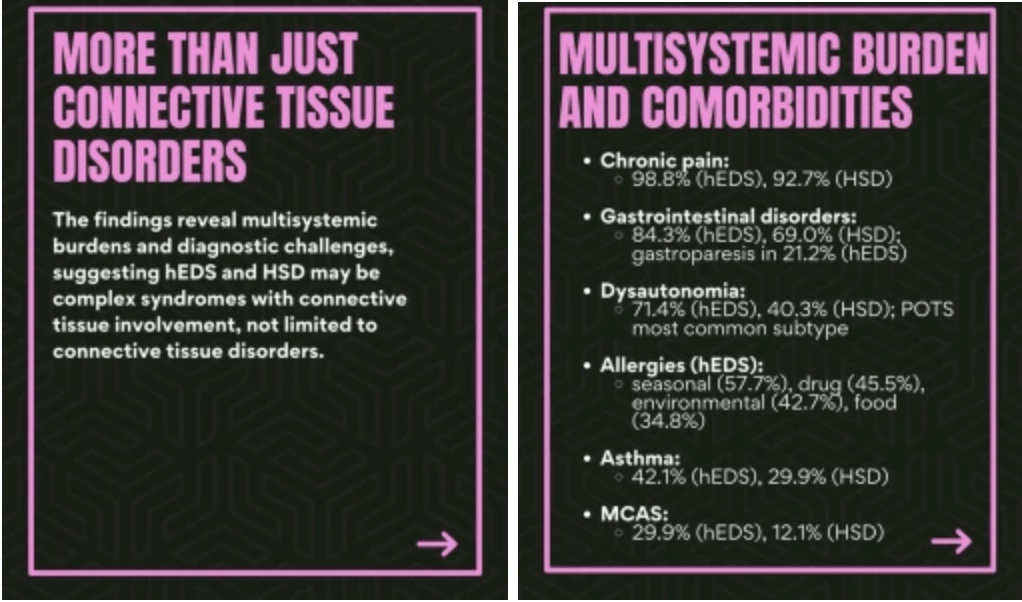
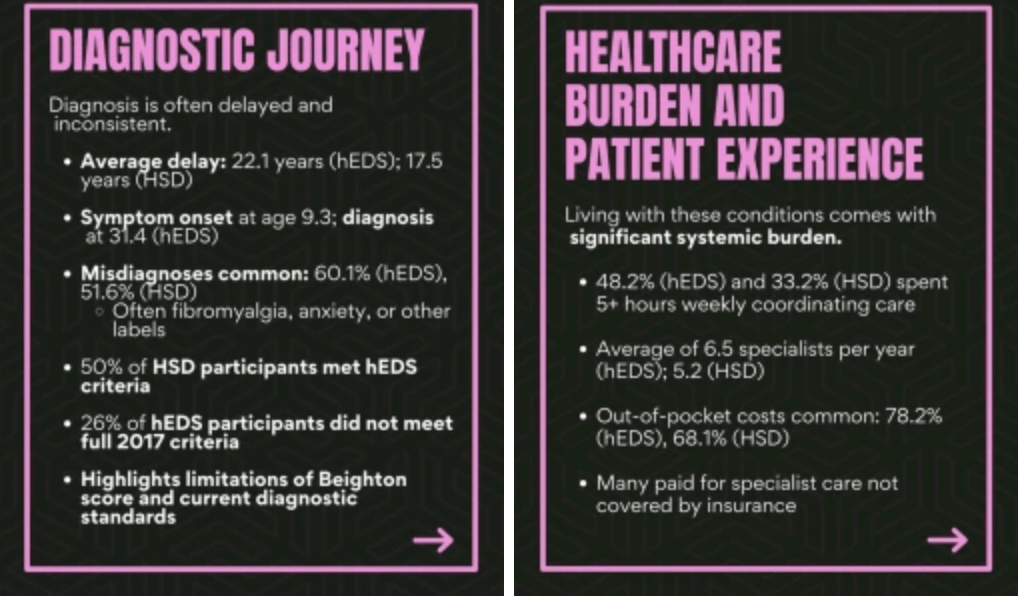
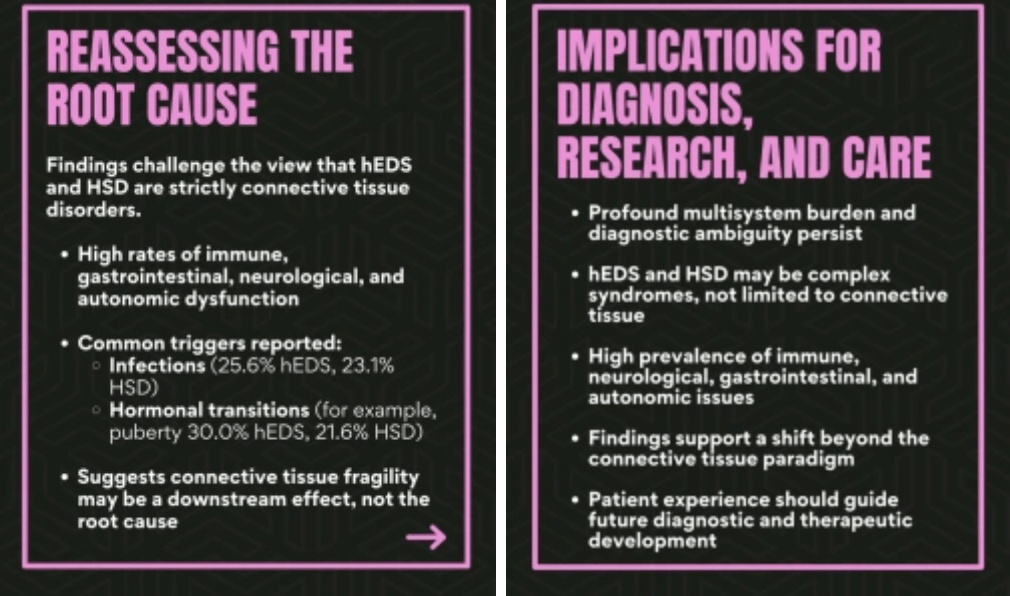
Image credits The Norris Lab on Instagram

 Living whole