
Anyone who reads my blog regularly will know that, last summer, I utterly crashed after going to a 4 day music festival (out of which I had only managed to attend for 3 of the days…) leading to a month of slowly unfolding but intense post exertion malaise and the worst orthotstatic intolerance of my life. To be honest, I’m pretty sure I also had long covid at the time and it was in the aftermath of moving house which had put me through months of rigours but, all in all, going to that festival finished me off and it took a whole lot of effort, patience and time to get me somewhat back on my feet again.
So this year has been the year of getting diagnosed and also getting some of the help that has been sorely missing for years…appointments with the right physios (for hypermobility), orthotists, working with an occupational therapist and trying out low dose natrexone (LDN) amongst them. By the way that last topic is too big to just skim over so I will be writing about it soon. All in all, I have had over 40 medical appointments this year, 5 of them with 4 different consultants, and clocked up costs that make me have to swallow hard, all taken out of our retirement nest egg, but it simply had to happen after 20 years of languishing with all these unconfirmed complex health issues that the GPs simply weren’t taking seriously enough so, after last year’s pinnacle of awfulness, I was now desperate for answers and help.
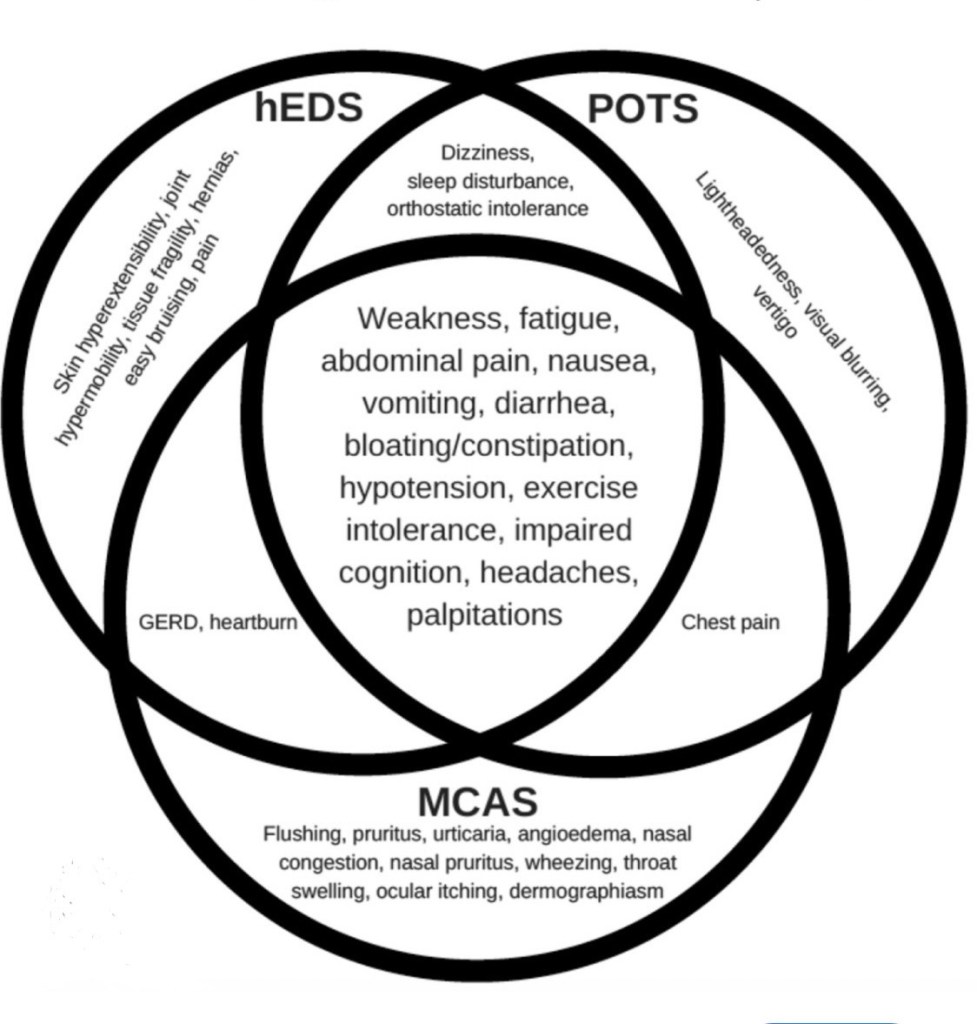
Finally getting diagnosed with the “trifecta”, as it is sometimes called, of hypermobile Ehlers Danlos Syndrome (hEDS), dysautonomia including POTS and now MCAS (now clinically validated by a specialist) has all been worth it. My GP is now on board as much as she can be (there’s not been that much that she can do to help), my medical notes are up to date and, at least privately, I’m now seeing the right people for the right things whilst learning better ways of managing day to day life from those with experience of these complicated conditions, not to mention having resources such as a National Disability ID card and Blue Badge to make things easier. It’s still a very big package of symptoms to live with but things are feeling much more manageable than they were before.
With all of that going on, there hasn’t been much time or stamina left over for anything else, what with ongoing appointments happening (on average) twice to three times a week but there were still a couple of things that were really important to me to do this year. One was my ambition to take part in a county wide Open Studios event back in the spring, which I successfully did…and it went really so well, in fact was a really big hit in my village with a great turnout of visitors; a great outcome for someone who had only just moved into the area and who hadn’t been well enough to exhibit for a staggering nine years. In the end, I was so pleased that I had had the courage to do it, even though it felt like I was biting off way more than I could chew beforehand given I was still barely back on my feet from the year before, but thankfully I had plenty of art stashed up that had yet to see the light of day so all I really needed to do was dust it off and get it exhibition ready. In fact my husband thought I was utterly mad to be attempting it but my gut said “just do it” and the experience exceeded all my expectations, as well as giving me a nice little hyperfocus to get stuck into.
The things that I did right with this were that I gave myself plenty of time to prepare and I diligently paced all the way through the preparations, doing one task towards it at a time then taking a few days or even a few weeks off before doing anything else. I also gave myself a get-out clause that I could call it all off for as long as was feasibly possible but, once I’d decided it was going ahead, that was it and I gave it my all. This, in spite of an early heat wave that had me lying flat on the floor recovering from intense waves of POTS between every single turn of the screwdriver as I assembled my picture frames the week beforehand, yet I still got it all done on time and it really couldn’t have gone any better. I knew I had the perfect room for this kind of thing when we bought this house and here it was, the most accessible exhibition space I had ever worked with; I didn’t even need to leave the house!
The really big thing on my side was this fact that it was all on home turf and I was able to elevate legs whilst I chatted to people who (by and large) had no idea about my health issues given they are invisible and, the one time I tried to stand up and act more “normal” as I served a person buying some art, I ended up putting so many extra zeros into the card reader, or not enough, repeatedly then getting into such a brain foggy muddle trying to cancel these transactions that I had get my husband to take over whilst I urgently got myself back into a legs elevated position on the chaise. That was my one and only flustered moment, the one time that I almost felt myself going into a bit of a meltdown, and I wasn’t even that fatigued at the end of the weekend as I had been buoyed-up by all the sales and really positive comments. The size of the space limited excessive numbers but I still had around forty people through my door over two days…and felt perfectly ok about that because it didn’t feel so much like a crowd as a “flow” that I could manage.
Not long afterwards, we went on holiday by the sea for a week and, in contrast with our last trip back in September, which had to be aborted on day two as I was just so unwell after the journey, we had a really great week so things were looking up. I had been on LDN for about 10 days at that point and was already starting to notice definite improvements with sleep and resilience including recovery times and orthostatic tolerance, which was so optimistic.
So that was a couple of months ago and the next big challenge, which I had (I have to admit) set up in my mind as some sort of benchmark of “recovery” to where I was pre last year, was that I was determined to go back to the same music festival as last July and that I would now cope far better with it this time than before. In fact, we had even bought another “weekender” ticket since the organisers had offered such a sizeable discount in return for all the suggestions I gave them about their poor accessibility arrangements last year that it seemed silly not to take advantage. However, somewhere not that far back in my mind, in spite of all the new lifestyle tricks and tools I’ve accumulated this year, courtesy of numerous sessions with my occupational therapist (who also has hEDS and POTS herself so she knows what it’s like doing these kinds of things) I realised it was still going to be really hard to sustain 4 days there, one after another when I would normally take at least one day’s rest after every day of exceptional exertion. Even with our new, much more comfortable seats and the trolley to carry them and all the other things I now take everywhere with me, like my TENS machine, folding stick, neck brace, supplies of electrolytes, knee supports and other orthotics, neck fan etc, this wasn’t going to be a stroll in the park by any means. As the festival approached, and my anxiety built, we took the executive decision to not to even go there on the first day after it opened, saving all my spoons for the more attractive line-up of acts on the other days, a decision that took a lot of pressure off me immediately but it still felt like I had a mountain to climb with so many factors to consider.
Food was certainly going to be an issue, I already knew that. Last year I took risks with the vendor food but, with MCAS now firmly on the table and knowing that the slightest “issue” with an ingredient or cross-contamination can knock me right off my kilter, it was important that I not let this factor sneak in to ruin how well I coped. So my master plan was to take a homemade sandwich for lunch and hot water in a flask for making Huel meals in the evening (much as loathe them and they do create other issues for my glitchy gut motility as they are pretty high fibre plus I suspect that the added vitamins trigger me in some other ways…they certainly contain B6 supplements, which I generally have to avoid due to accumulation that leads to nerve pain, see my earlier post on this yet these seemed like the only option during such hot weather.
The other big issue would be having to sit so long in an upright position, not just because deckchairs (even our newer ones with higher back supports) are always uncomfortable after an hour or so, especially when you have chronic pain but because of my need to tilt backwards occasionally and elevate legs as much as possible to prevent blood pooling to my extremities. Apart from POTS, this dysautonomic issue of mine causes really intense pelvic and bladder pain lasting for hours or days afterwards (for which I am currently seeing a pelvic physio) and can get so much worse on days when I am sat upright in a conventional chair position for any significant length of time. So I took along a folding stool for my legs and some seat pads for comfort but there was nothing I could do for my need to lie down except occasionally lie on the ground, in spite of severe grass allergy.
On the upside, the festival is local so we could easily get home from it without my usual trials by car and I had all my various strategies mapped out for coping, including a plan for quickly winding-down each night when we got home in the hopes of achieving better sleep quality than last time. So yes, I was optimistic and really thought I could get away with it all if I was careful and stuck to the plan.
In fact, for weeks now, I had been in dialogue with the organisers about all the nuts and bolts so I now had in my possession a disabled car park pass (my Blue Badge application was still in the pipeline at the time, since received, but I was able to show them my supporting documents to get one of these), a pass for the “quiet tent” and another for the disabled zone in each of the two tented music venues.
When we got there, I found that the disabled zones in the two tents were bigger (although not by that much) than last time and, as per my suggestions, had been roped off this time to prevent other people inevitably encroaching on them. One problem we hit was that the entry point into this zone (in the main performance tent) was right at the back of the roped off area and this became completely blocked-off by the sheer number of able bodied people setting up their chairs right up to its very threshold, leaving no room for any of us to get in or out (this might have been avoided if the organisers had spray-painted hashed-out markings on the grass to indicate areas that were to be kept clear at all times). One of the safety officers came over to address this and ended up opening up the roped barrier at the front of the zone to create a safety exit. Of course, as soon as she did this it took less than 5 minutes before an opportunistic member of the able bodied public decided to come into this “empty” area, right in front of all the seated disabled folk and so close to my chair it was uncomfortable, where they proceeded to stand watching the performance, apparently oblivious to having done anything they shouldn’t have. Whether they didn’t spot the disabled “pass holders only” sign or just decided to ignore it I can’t be certain but nobody was going to take them on and the stewards had all disappeared by that point.
Another improvement on last year was a far bigger and better disabled loo but what it gained in being a proper, sturdy cubical this time, with an access ramp and much more stable and secure feeling than a wobbly plastic portaloo, was lost by it being the only one at the whole festival and positioned far nearer to the two smaller venues than the main stage where we inevitably spent most of our time once the evening line-up began. Over the course of the day, I watched myself clock countless hundreds of steps back and forth to that loo, thankful that I had brought my stick but, all the same, steadily wilting as I far exceeded my daily physical limit in these laps because I really needed the space of that bigger cubical in which to carefully unravel all my things like the TENS machine pads I had fixed to various parts of my back (without dropping them into the loo) and to manoeuver off all my various layers and supports. The quiet tent, by the way, turned out to be so small and low down for crawling into that I was concerned about getting in there intact only to find I was going to have to play sardines with a complete stranger…suffice to say, I never used it.
Other factors that couldn’t be helped were the incredibly blustery weather and the sheer number of people in attendance, Friday night possibly being the most popular of the whole weekend as there had been a “veteran musician” headliner booked until he had had to cancel due to injury and you could see from the depths of the crowds that this had still drawn a lot of extra people in. Thank goodness the organisers had the foresight to put up side walls to the disabled zones (my comments last year about some of us with sensory disabilities being so adversely affected by the elements when we are always the ones positioned “to the edge and back” of the venue may well have contributed to this…) but, even with this barrier, the wind was still coming in at an angle, blasting against my face, neck and upper body all evening long. In fact, the often triggering effects of seasonal weather vagaries have been some of the hardest things to cope with at this and other festivals in the past since my symptoms respond minutely to transitions and extremes.
And those crowds…just looking at them made me feel overwhelmed in ways that I seldom used to notice before last year, once I got immersed in the music (this lifetime habit of tuning out from my body’s needs whenever I hyperfocus on things that interest and distract me has allowed me to override a lot of highly overstimulating situations in the past). Now it seems quite obvious to me that I am really not very happy in a crowd, nor even happy near a crowd, and I suspect that has been the case forever and yet I never gave it a proper thought until forced to consider literally anything that may have contributed to the wholesale crash of last summer. So is it true that, without even knowing it, I have always struggled wherever people gather in large, unpredictable numbers? Yes, I’m now forced to admit, it has always been my trait to take some sort of “hit” around crowds and, looking back, the way I used to cope with it (after a fashion…) in my earlier years was to numb myself with alcohol, something I can no longer do but, looking back, it runs like a common thread of behaviour whenever I had to deal with busy places or a load of sensory overwhelm, getting me into all sorts of additional scrapes.
So there I was with the wind (being one of my biggest physical triggers) buffeting my face so relentlessly that my left eye, ear and all the nerves down the left side of my face are still feeling hypersensitive five days later. Where we were sitting was separate from, but still overlooking, a vast sea of humanity crammed so closely together in their deckchairs that, looking over their heads, I couldn’t seem to detach myself from the discomfort they must all be feeling or, more likely, the discomfort that I knew I would be feeling if I was amongst them because that’s what I do…I transpose myself into other people’s shoes, even when I don’t know them and even when my responses to their situations are far stronger than theirs apparently are. This so called empathy is worse than just having over zealous mirror neurones at work and is more akin to the common autistic trait of anthropomorphism that attributes feelings to inanimate objects (a trait I have in spadeloads) though I’m not trying to suggest other people are inanimate or lack sensibilities…just that mine are extra finely tuned and sometimes assume more sensations are being felt by others than actually are.
In fact it made me squirm to think that, exactly a year ago, I had been positioned down there in that same mosh pit where, just when you thought that not one single extra human being or dog on a leash could possibly be squeezed into the space, even more would arrive, attempting to create rows were there was no row to be made. At one concert last year, I had a woman almost sitting in my lap, so close to me did she get as she claimed the space actually required for my feet for her chair and, at another one, a not small proportioned man came along and overlapped the arms of my chair with his chair, forcing an intimacy that had me braced tightly into myself for the rest of the evening. So even though we were safely segregated from all that, this time around, the visceral memory of it all was still too fresh in my senses to let it go as I watched all these other tightly crammed people. I also found myself feeling ever more irritated as more and more people arrived late and continued to wedge their way into highly improbable spaces, with no acknowledgment or apology to the people they were squeezing in with or standing in front of, fidgeting and shifting around with no regard for the performance underway.
No, it’s safe to say, I don’t get on with a crowds nor understand many of the behaviours I witness in them and, being forced to sit near the back, all I could pretty much see was the crowd between me and the stage. My only way out of it was to stim with my camera, spending a lot of my time viewing the stage through a zoom lens which, in hindsight, was my way of zoning out from the peripheries as best I could and keeping my eyes on what I was really there for, the performance.
In fact I am begining to notice that the success of a concert for me, these days, pretty much relies on some creative seat allocation that allows me to become one with the performance yet shut out all the surplus people. A few weeks ago I successfully managed a concert at one of our bigger local venues (same venue where I had seriously struggled with overstimulation the time before) because I chose the kind of seats that very few other people seem to want (they are even priced cheaper) that are tucked off to the side, almost overhanging the stage. I loved this as it was almost like having a private box and there was a door just to the side of me that lead to what was virtually a secret passageway with access either to a lobby below or back to the main stairs, allowing a means of escape. The intimacy of our view of the artist and the band was just brilliant, there was no one either in front or behind us (in fact there was a high wall behind my head) and the chairs were unfixed so we could move them freely to get optimum legroom or closer to the edge of the “box”. Meanwhile, by focusing on the stage, since we were so close to it, I could become completely absorbed in the performance and almost forget there were 100s of other people in the same “room” with me because I had absolutely no need to look at them. At the end, we waited for the crowds to clear and then slipped away to the car without me feeling in the least bit overstimulated, as proven by the fact I was able to get straight off to sleep that night, which is a rarity after a night out. It was almost like a private audience with one of our favourite musical artists and these are the kind of concerts I do well at because its not about all the other people in attendance!
So, back to the festival, we were there for 8 hours in total, getting home late and falling into bed just after midnight (it was fairly close to home so travel wasn’t really part of my issues for once). This was the latest bedtime I could remember so far this year and, though I did what I could to keep to my usual routines, I was incredibly tired but wired when I finally hit the mattress.
When I woke the next morning, from what had been a really choppy night with very poor quality sleep and long phases of lying awake with the first heart palpitations I’ve had in absolutely ages, it was obvious that my festival was over for this year, there was no way I had it in me to go back.
I could have tried to convince myself that I would “probably feel better when I got there” but, after last year and those unmistakable clues in my body that show up as a slight tremor in my hands, the odd random thudding of the heart, feeling light headed when I stand and blood readily pooling to my feet as soon as upright, my brain extra sensitised to every kind of stimulus and infinitely foggy when it came to making any decisions, I knew my nervous system was already in big strife before the day even started. My Visible app and Garmin watch then confirmed this, showing a very low “stability” score for the day and that my “body battery” was at such a low ebb, measured at literally half the energy I would usually start the day with, that I was already in deficit before I even went anywhere.
And if there is one thing I have learned, the hard way, this last year, its to listen to all the measurable data on my apps when it comes to pacing because, whilst I might try to soft-soap myself about how I’m feeling, those things never lie!
Of course, I felt glum after I made this decision not to go and there have been times since when I have felt like an abject failure for giving up after just one day at the festival, “wasting” all my other tickets, “letting down” or “disappointing” my husband though he has been, if anything, more pragmatic and zen about it all than me. I’ve also felt quite heavy hearted that it all may be a sign of things to come and that I will “never manage” to do things like go to music festivals ever again, which feels like a sort of death, the beginning of the end, after years of measuring how good and vibrant life is according to how littered it is with such memorable functions and events as these (oh how we are conditioned to benchmark ourselves). But then none of that conditioned thinking takes into account whether these are actually my kind of events or ever really were. Perhaps its not all about my disabilities getting worse or holding me back more than they once did; perhaps a good portion of it comes down to the ongoing process of unmasking my autism because how much have I ever really enjoyed overstimulating, crowded places; how much of it always came back to me trying to convince myself I enjoyed them because they seemed like the normal “fun” places to go and like normal things to do, and there was me trying so hard, all the time, to normalise which is something I don’t do any more.
As the dust settles, I don’t think I should ever underestimate the degree to which my autism contributes to the aftermath of times when I put my body through situations that are not only physically challenging but also significantly more overstimulating than I am used to, or able to cope with, as well. The social hangover that hits me from such events can manifest as a myriad of physical symptoms, not just as wanting to withdraw from seeing people for a while but a wholesale crash of many factors in my health, from joint and nerve pains to digestive distress and other dysautonomias including increased joint laxity, which then leads into worsened disabilities and intense fatigue. I have to stop underestimating the complexity of some of those physical effects since they stem from a nervous system that has likely felt more rattled or stressed than usual, my body held in unusual tension or in a braced position for far longer than I am even aware of at the time, because the very high stimulation of the event and the unnaturalness of the sitting posture disguises that my body is being held in an unnatural situation and is not feeling relaxed most, if not all, of that time. It can be hard enough to check in with my body under normal circumstances, due to my autistic issues with proprioception and interpreting physical cues, but it is nigh on impossible when everything going on is creating distraction all around me. Of course, having hypermobile joints commonly results in this bracing effect, which is why hEDS can lead to such chronic pain, tension and rigidity but its very hard to single that out from the emotional effects of being someone who automatically tenses when around other people or a lot of sensory triggers. In other words, its a combined effect, but the sensory overwhelm factor can be the very thing to push everything else over the edge, making up the difference between feeling a bit fatigued in a fairly expectable way after an event and being utterly flattened for days or even weeks and months afterwards.
Is this really so new? Haven’t the signs that I struggle with crowds and places that generate massive amounts of sensory overstimulation been there for years now, noticed more as I have slowly unpeeled the mask from my neurodivergent senses? Don’t I remember that time, which must be at least a decade ago now, when I wrote a post about my trip to Amsterdam and how lovely it was being along all the canals and in the sides streets but then we ended up being swept along by the seething crowds into the centre of Dam Square and I became painfully aware of how adversely I was being affected, in all my physical sensations, by my proximity to just so many people all at once and by so much overstimulation suddenly hitting my body in contrast to how I had felt at ease just moments before. Hasn’t every airport I have ever passed through (thankfully I’ve managed to avoid them for over 6 years now) been like that too, potentially rocking my health so much en route to wherever we are going that I often spend the first part of every holiday abroad in recovery mode whenever we fly there? Another classic example is all the Christmas markets I used to think I loved to go to because who wouldn’t enjoy the visual stim of them but, last time we stayed over a weekend to visit a big one of those, we found ourselves actively avoiding the slow moving crush of people to be found anywhere near the market itself, not even going close unless it was very early in the morning, even before all the stalls were open, and finding other things to do with most of our time, completely defeating the objective of the trip. It’s a shame because craft stalls, for me, are all about engaging patiently with the product and chatting to the artisans about their craft but that’s seldom ever possible in all the Christmas shopping frenzy, whereas I went to a lovely craft market in the spring where I was able to walk around at my own pace and ended up having some wonderful interactions with stallholders, some of whom I’m still in contact with. Chalk and cheese…by virtue of there being more or less crowds of people in attendance!
Such negative associations with markets aren’t helped, for me, by the fact that, last year, I came down with three weeks of flu after going to our local Christmas craft event and, more or less exactly a year before that, picked up covid whilst finally visiting the famous Haddon Hall Christmas market that had so long been on my wish list, which turned out to be such a hideous crush of people you couldn’t really stop to look at any of the stalls anyway. In fact that one was an awful sensory experience, a farce dressed up as “enjoyment” really, kicking off one of the longest phases of severe health issues I’ve ever had because of the covid I came home with so I haven’t had much luck with those kinds of events lately.
When I think back to all these struggles, it makes me shudder to think back to how I once, in my early twenties, put myself through commuting on trains so routinely overcrowded that I was forced to stand pressed up close against all the other standing-up people almost every day for months and in the hot weather and then wondered why my health went into its first ever major downward spiral of mystery illness for months.
So maybe the era of covid helped make the recoil I feel around being in throngs of people more overt to me but there is really no pulling these sensory sensitivities out of the health picture I live in and, if I’m going to avoid the constant setbacks, I really have to know when enough is enough, either at the time it’s happening so we can call it quits promptly, or in general when it comes to planning these things in the first place. So do I continue to plan them at all or do I decide they are globally “not for me”; a question that remains on the fence but I know which way I am swinging.
Where that leaves next year’s festival I am really not sure but we are already open to skipping it for at least a year or certainly only making it a one day thing, perhaps even just going for a couple of hours or so rather than the whole day. Whatever we decide next year, the most important thing is to keep getting ever closer to living within my actual capacity (not some pipedream based off “what I have done in the past”), knowing my limitations, tailoring my life more and more to what feels good without all the compromise and stepping away from circumstances that have too high a toll to be any good.
The open studio worked out because I did it my way, on my own turf, surrounded by familiar things and with controlled numbers of people coming through the door and then only expected to talk about topics that I’m truly fired up and enthusiastic about (no real small talk), so everything was really on my side there, meaning my energy stayed largely intact (I pretty much just described a perfect autistic scenario and I know it). Yet when invited to consider getting involved in other types of art events on the back of that one, as has happened a couple of times now, I decided to politely say no and to be perfectly honest and open about why I’m not open to taking on more.
By contrast, the festival was really not so ideal in lots of ways and, though the genre of music there really interests me, so much of that main reason for being there gets submerged beneath the sheer overstimulation of it all so if there are other, better, ways for me to engage with live music I would do better to focus on them and, thankfully, we are blessed with plentiful other options where we now live.
In the aftermath, my body now hurts in places I’d forgotten it could hurt, in spite of the much more comfortable chairs purchased to take with us, the TENS machine and fan (both tools that have helped my resilience enormously in other situations lately) and all the efforts made to move my body around between sets. More than the obvious physical symptoms, which my physio spent most of Monday’s session trying to put right, my entire nervous system has felt more rattled and hypersensitive than for quite some time. Not quite in shutdown (though I certainly was for the first day afterwards), I’ve had to be pretty quiet and selective about sensory exposures this whole week and my stomach has been a mess of random spasms and pain, in spite of the fact I completely avoided all festival food this time so that couldn’t be blamed. Its fair to say I am still in recovery from that one day out but at least it was only one day and hopefully, by cutting my loses, I’ve narrowly avoided being set back for months as I was last year.
Is what I describe a common neurodivergent response to this kind of event or am I just showing my age? Well, it seems I’m far from the only neurodivergent or disabled person, or both, from various age group brackets, sharing their “tricky” experiences of going to festivals and such, even though we are some of the most enthusiastic people to go to them; a paradox indeed, as these arty kinds of venue are typically stuffed full of alternative seeming types and, after all, we neurodivergent folk are very often drawn to live music and performance, plus all the colour and craftiness of such events. Perhaps there are degrees of tolerance when it comes to all the other stuff that festivals entail and maybe I am at the thin end of that wedge which, added to my health challenges, makes it extra hard in my case and for anyone else also dealing with disability. Some of the other posts I have found on this topic are linked below. By comparison to some of those described, the festival we go to is very small and pitched at a completely different age-group but everything is relative and I can equally remember being in sensory hell the one time I got persuaded to go to the Monsters of Rock Festival at Donnington Park when I was in my early twenties, an experience I didn’t choose to repeat, not even when the Reading Festival was just down the road from my house and no matter how hard my friends tried to twist my arm to join them. In fact you were more likely to find me at an outdoor opera or theatre performance by my mid to late twenties, which says an awful lot. The one time I made it to WOMAD for just an evening, I spent most of my time hanging around the crafts stalls or in the fringe tents having my own little introverted sensory experience. Yes, these issues have always been there!
I maintain, in conclusion, that the biggest win here (far bigger than if I had “successfully” pushed through the whole event) is to realise all of this and to at least question the logic; to cease shoving myself through the same experience and then wondering why I had yet another bad experience or crash. The very definition of madness would be to keep showing up every year only to wipe out my whole summer afterwards. Thankfully (and with fascination I notice this) the length and depth of the crash seems to be in proportion to the length of time spent putting myself through the experience that doesn’t fit. Last year I spent three days at the festival and it took me three months afterwards to get back to where I could leave the house or be on my feet for longer than a walk across the length of my kitchen without feeling dizzy and fatigued. This year I was there for just part of one day and, whilst I am in a lot of extra pain and yes I am feeling extra tired this week, I have not yet had the same crashing fatigue as that which I would label “post exertional malaise”, which is a whole other kind of fatigue compared to anything else and which stayed with me for months after endless months last year, so my hope is that I will bounce back rather sooner than last time. On top of that good news, I have at least now learned to start accepting some of the things I clearly needed to know about my genuine tolerance levels and preferances and have started asking some of the right questions such as “is it really worth it”.
Other people’s similar experiences
I Went To A Music Festival & Cried In My Tent — But It Was One Of My Biggest Learning Experiences
No sleep, meltdowns and Billie Eilish: my first music festival as an autistic person – Guardian article
Sensory hell, stim heaven: an autistic view of gigs and festivals
‘It’s upsetting’: the autistic music fans being shut out of gigs – Guardian artcicle
‘I plugged my nebuliser into a riot van’: what is it like being disabled at a festival?
Disclaimer: This blog, it’s content and any material linked to it are presented for autobiographical, general interest and anecdotal purposes only. They are not intended to serve as medical advice, diagnosis, treatment or prescribing. Opinions are my own based on personal experience. Please seek medical advice from a professional if you are experiencing any mental or physical symptoms that concern you.

 Living whole
I can definitely see the autism as being a helping factor with your home exhibit–the way you were able to plan it, gain energy from the hyperfocus, and orchestrate all the tasks at your own schedule really made that work in a way that accommodated your trifecta! I bought a new house recently (the one right next door to me), and I’m still very much deep in grief due to two significant recent losses, but my autism helped me so much, in precisely the same way that you describe how you organized your exhibit. When we can be in control of pacing and scheduling and figuring out the details, when the activity is at or near home, and when we can manage the interactions, it can go so well, and we are boosted through our autistic traits! As for social overwhelm and sensory processing issues, I also recently had a mini-meltdown that nearly became a full-blown meltdown when a garden group I’m in met at a busy restaurant in a busy strip mall and, because I needed some signatures from some of the members, I attended. I made a quick exit once I got the forms signed! It was just too, too much, and I think we just need to always realize that. It’s great to hear all the clarity that’s coming from your diagnoses!
LikeLike
I’m so sorry to hear you are still in the land of grieving, there can be no hurrying that process unfortunately as we know but my heart goes out to you. So interesting, though, to hear how the project with house was such a help and in such a similar way to how I described it with the art event. Yes its the being in control of it that makes all the difference, all the way down to the minutest details, the sensory exposures and the pacing of it…and no outside surprises to derail it either. Since I did my open studio I’ve been encouraged to consider growing it into a multi-artist thing (at my premises) and, whilst I can “see” that in my mind’s eye, if I were to put myself into the shoes of a neurotypical person, there are two main stumbling blocks, one being that it would force me to network with other artists (a complete unknown quantity since we keep to ourselves and of the very few I have so far met here, I’m not sure I can envision a team effort) and the other being the way that it would change the whole dynamic and burden me with accommodating others’ expectations and preferences, not just my own. For the time being, my gut feeling is to go back and say no, this isn’t for me…not yet anyway…I need to first enjoy a couple of years doing it strictly my way, a luxury I’ve never had before. I can well relate to the near-meltdown you had during the meet-up at the mall too…that would be a one-plus-one for me (at least we didn’t have to engage with anyone else at the festival, although I was almost persuaded to go as a group…a bullet dodged). Yes, gaining the clarity gives back more than any “loss” of engagement as might be seen to be the case through neurotypical eyes! Thank you for your wonderful feedback as ever.
LikeLiked by 1 person